
Define
Program Outcomes, PSOs and Course Outcomes mapped to the curriculum.
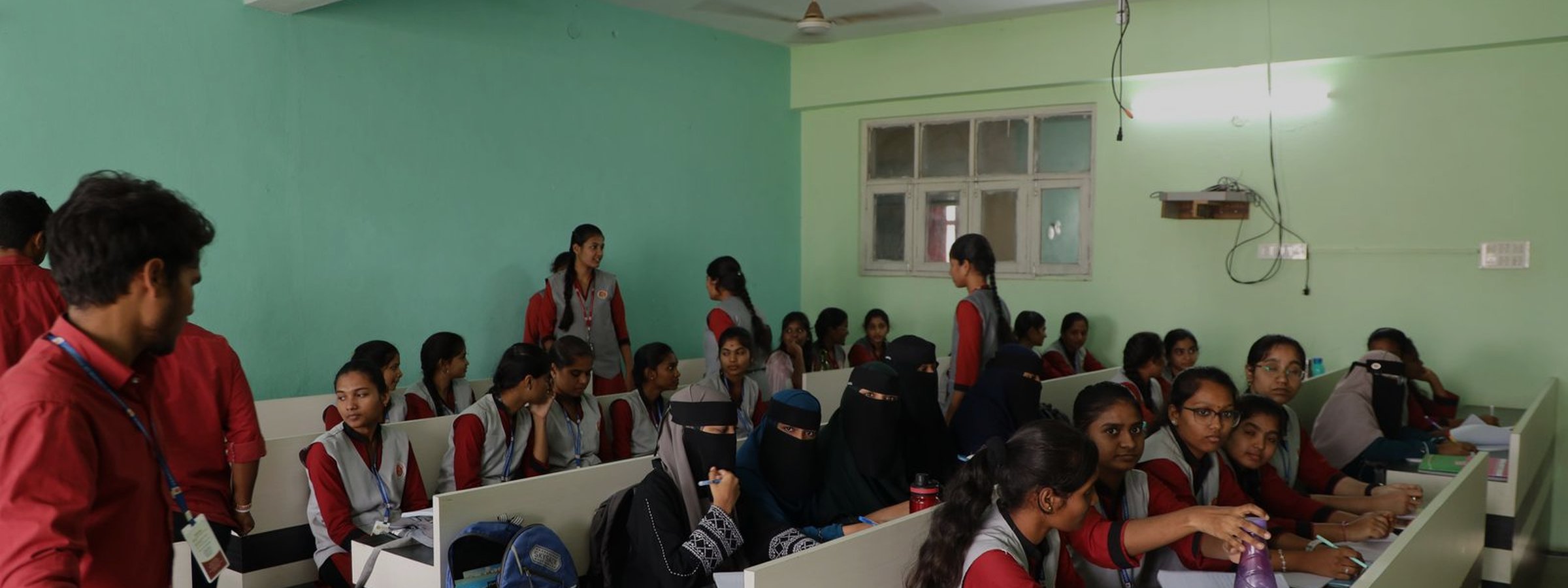
Teaching, assessment and continuous improvement organised around clearly-defined Program Outcomes, Program-Specific Outcomes and Course Outcomes.
Outcome-Based Education defines what a graduate should know and be able to do, then aligns curriculum, teaching and assessment to those outcomes. Program Outcomes (POs) and Program-Specific Outcomes (PSOs) are mapped to Course Outcomes (COs) for every subject, and attainment is measured through direct and indirect assessment and reviewed each academic cycle.
The Program and Program-Specific Outcomes below are the B.Pharmacy outcomes framed under the Pharmacy Council of India's CBCS regulations. The full per-subject Course Outcomes are available in the document at the foot of this page.
Program Outcomes, PSOs and Course Outcomes mapped to the curriculum.
Outcome-aligned teaching, assessment and continuous internal evaluation.
Direct and indirect assessment of CO / PO attainment.
Gap analysis feeds curriculum and delivery improvements each cycle.
The twelve Program Outcomes for the four-year B.Pharmacy degree.
Possess knowledge and comprehension of the core and basic knowledge associated with the profession of pharmacy, including biomedical sciences; pharmaceutical sciences; behavioural, social, and administrative pharmacy sciences; and manufacturing practices.
Demonstrate effective planning abilities including time management, resource management, delegation skills and organisational skills. Develop and implement plans and organise work to meet deadlines.
Utilise the principles of scientific enquiry, thinking analytically, clearly and critically, while solving problems and making decisions during daily practice. Find, analyse, evaluate and apply information systematically and make defensible decisions.
Learn, select, and apply appropriate methods and procedures, resources, and modern pharmacy-related computing tools with an understanding of the limitations.
Understand and consider the human reaction to change, motivation issues, leadership and team-building when planning changes required for fulfilment of practice, professional and societal responsibilities. Assume participatory roles as responsible citizens or leadership roles when appropriate to facilitate improvement in health and well-being.
Understand, analyse and communicate the value of their professional roles in society (e.g. health care professionals, promoters of health, educators, managers, employers, employees).
Honour personal values and apply ethical principles in professional and social contexts. Demonstrate behaviour that recognises cultural and personal variability in values, communication and lifestyles. Use ethical frameworks; apply ethical principles while making decisions and take responsibility for the outcomes associated with the decisions.
Apply ethical principles and commit to professional ethics and responsibilities and norms of the pharmacy practice.
Communicate effectively with the pharmacy community and with society at large — being able to comprehend and write effective reports, make effective presentations and documentation, and give and receive clear instructions.
Apply reasoning informed by contextual knowledge to assess societal, health, safety and legal issues and the consequent responsibilities relevant to professional pharmacy practice.
Understand the impact of professional pharmacy solutions in societal and environmental contexts, and demonstrate the knowledge of, and need for, sustainable development.
Recognise the need for, and have the preparation and ability to engage in, independent and life-long learning in the broadest context of technological change. Self-assess and use feedback effectively from others to identify learning needs and satisfy them on an ongoing basis.
Prepare graduates to succeed in technical or professional careers across the pharmaceutical industry, institutes and the health-care system through excellent real-time exposure to rigorous education.
Prepare graduates of the program to learn and adapt in a world of constantly developing trends.
Prepare the graduate with a foundation in science, formulation technology, synthetic knowledge and discovery tools as per the requirements of the pharmaceutical sectors.
Strengthen the professional and ethical attitude, effective communication skills, teamwork skills, a multidisciplinary approach, and an ability to relate pharmaceutical-sciences issues to a broader social context.
Stream a lifelong career of personal and practising professional growth with ethical codes and self-esteem.
Pharm.D program outcomes are being finalised and will be published here.